
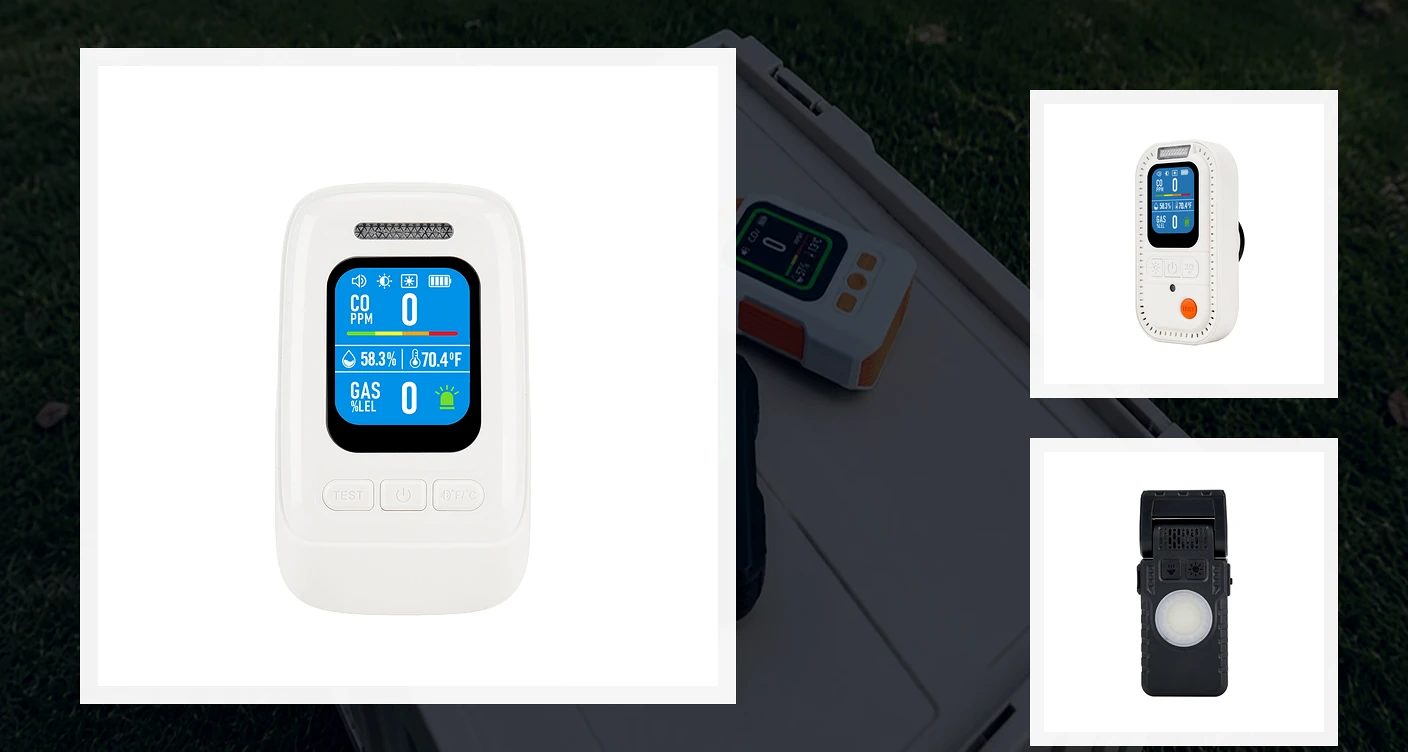
Importers who treat a natural gas alarm as a generic “China SKU” often pay later—wrong sensor for methane vs LPG, mismatched plugs, or factories that cannot support private-label packaging. This guide shows how B2B buyers source an OEM natural gas detector from China with a clearer RFQ, stronger factory checks, and a catalog that converts after goods land. You will see how combustible-gas detection sits next to CO SKUs, what to lock before tooling, and how SORBO supports OEM/ODM programs for partners evaluating wzsorbo.com.
What “OEM Natural Gas Detector” Means in Real Catalogs
In retail and wholesale language, an OEM natural gas detector is usually a combustible-gas leak alarm for methane-rich town gas or natural gas. Many units also cover LPG/propane when the sensor and firmware are specified that way. Buyers should not confuse this category with carbon monoxide-only alarms: CO is a toxic combustion byproduct; natural gas and LPG create fire and explosion risk when they accumulate. Strong China programs often offer both tracks under one gas detector line so distributors can sell kitchen leak protection and CO safety without splitting factories.
For private-label buyers, “OEM” typically means branding, color, packaging, manuals, and selectable functions on a proven platform. “ODM” goes further into structure, firmware thresholds, and market-specific variants. Confirm which path you need before you ask for samples—otherwise factories quote different MOQs for the same conversation.
Need an OEM natural gas detector brief reviewed?
Share target markets, gas type, power preference, and branding scope—SORBO can map them to an existing combustible-gas platform.
Why B2B Buyers Source OEM Natural Gas Detectors from China
China remains the default manufacturing base for residential and light-commercial gas safety electronics because tooling, sensor supply, plastics, and PCB assembly sit in one ecosystem. For brand owners, that usually means:
- Faster platform reuse — logo, color, and packaging changes on validated hardware.
- Flexible power architectures — plug-in mains with backup cells, or rechargeable portable formats for multi-channel retail.
- Assortment depth — combustible gas, CO, and multi-gas SKUs from one OEM conversation.
- Controllable landed cost — when MOQ, testing, and packaging are specified early.
Cost alone is a weak reason. The commercial win is a factory that can document sensor type, calibration process, alarm behavior, and export packaging without rewriting your RFQ three times.
Build Your RFQ Before You Message Factories
A clean RFQ is the difference between comparable quotes and sales-speak. Include at least:
- Target markets and plugs/voltage — EU, UK, US, AU, Middle East, and others drive enclosure, plug, and labeling variants.
- Primary gas — natural gas/methane, LPG/propane, or dual combustible coverage; note placement expectations (ceiling vs low wall) using guides such as natural gas vs LPG detector placement.
- Whether CO is required on the same SKU — dual combustible+CO devices simplify kits for some retailers.
- Power — hardwired/plug-in vs battery/rechargeable; see battery vs hardwired gas detectors for channel implications.
- Display, alarm level, language packs, and app needs — keep firmware scope realistic for first MOQ.
- Branding pack — logo, color, carton, blister/box, barcode, insert languages.
- Compliance evidence needed — ask for applicable reports for the exact model family, not a generic factory brochure.
- MOQ, sample lead time, mass-production lead time, and payment terms.
OEM RFQ Readiness Scorer
Score your sourcing brief before you request quotes. For planning only—not a certification or compliance tool.
Check what you already have locked:
Select the items you already have, then calculate.
Want SORBO to turn your RFQ into a platform shortlist?
Browse the live gas detector category, then send your checklist through OEM/ODM.
Sensor, Power, and Form Factor Decisions That Change Cost
Natural gas programs live or die on sensor choice and power. Semiconductor sensors are common in residential combustible alarms for cost and response characteristics; catalytic combustion sensors appear in other industrial or higher-duty designs. For a buyer-facing overview, compare approaches in semiconductor vs catalytic gas sensors, then ask the factory which type is on the exact PCB you are buying—not a sister model.
Power and form factor usually fall into commercial patterns:
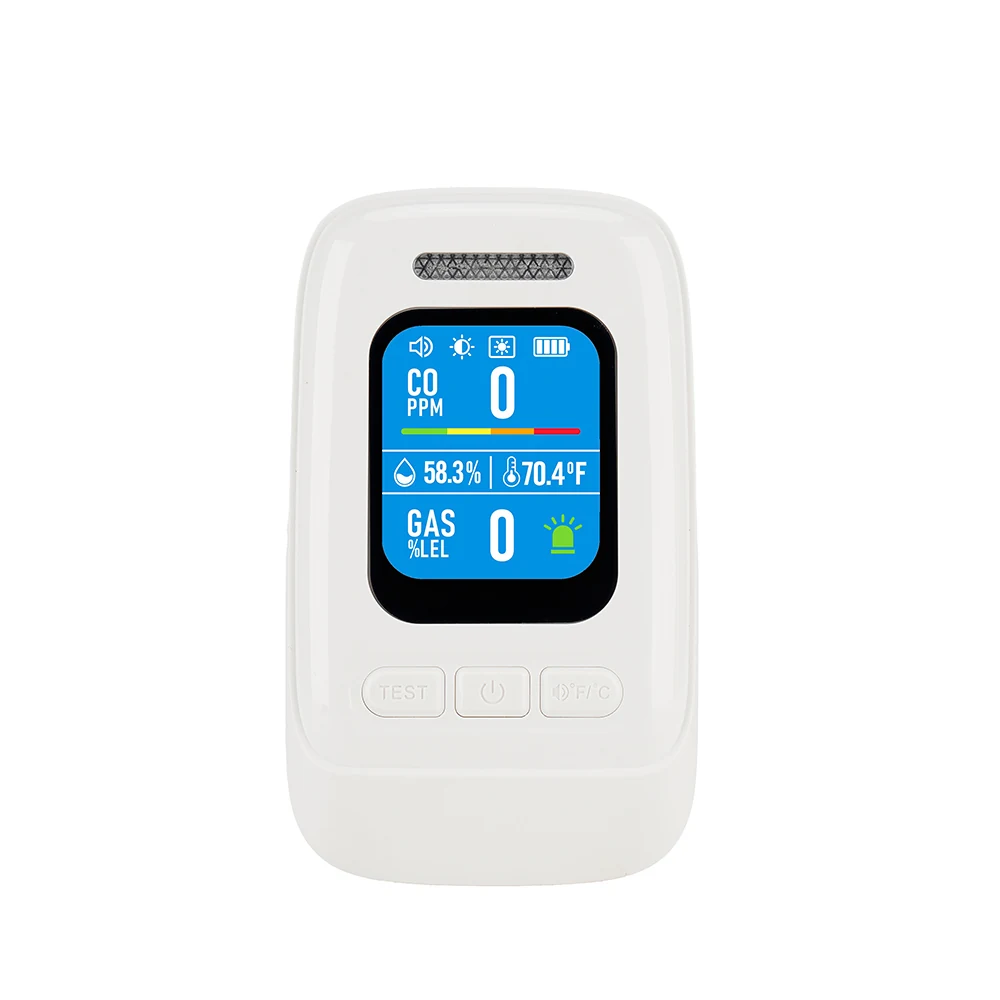
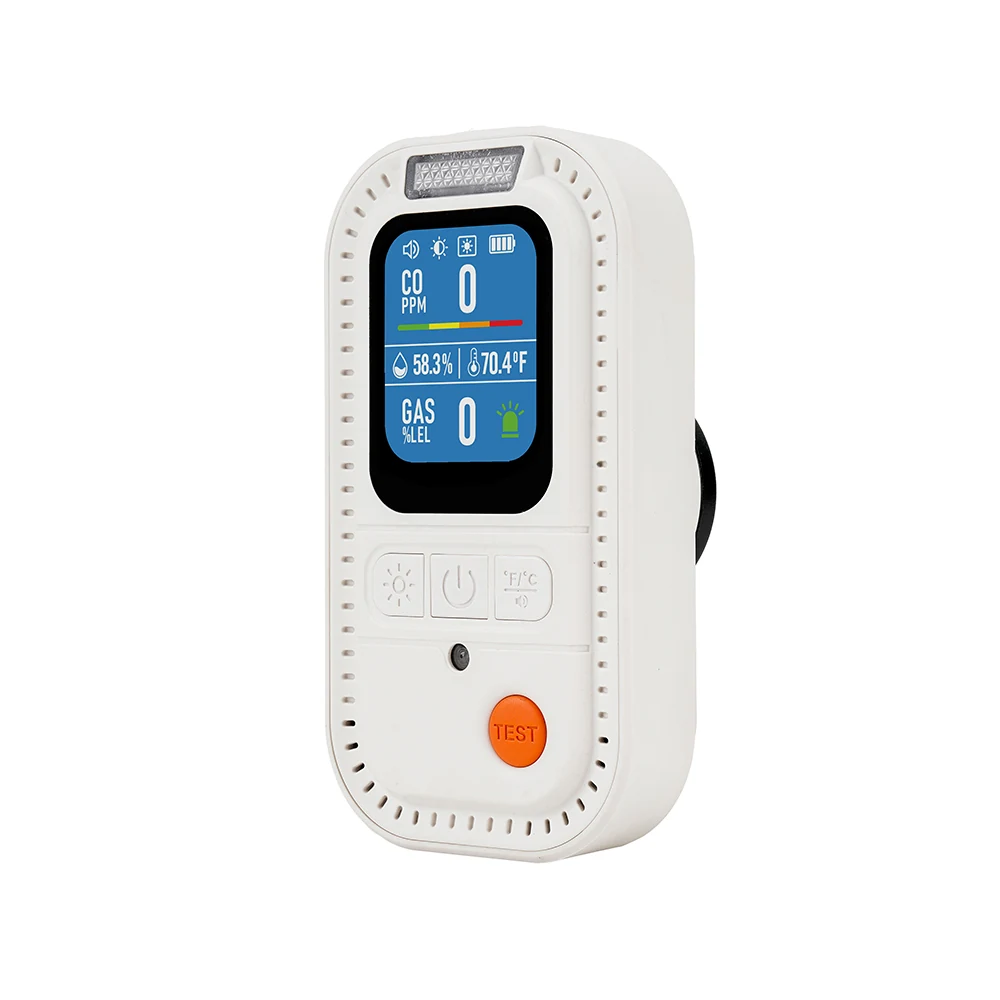
- Plug-in wall units — continuous monitoring near kitchens and appliances; often paired with backup cells. Example platform: plug-in combustible gas and CO detector.
- Rechargeable portable multi-gas units — useful for travel, RV, and secondary retail channels. Example: rechargeable combustible gas and CO detector.
- CO-focused portable SKUs — complete the safety shelf even when the hero SKU is natural gas leak detection, for example a portable carbon monoxide detector with flashlight.
How to Vet a China OEM for Gas Safety Devices
Price sheets are easy. Evidence is harder. Ask factories for:
- Photos or videos of aging, gas tunnel/calibration, and final inspection for the model family.
- Bill of materials notes for the sensor brand/type and critical ICs (at least at sample stage under NDA).
- Sample vs mass-production change control—who approves firmware or sensor substitutions.
- Packaging drop tests and language proofing process for your markets.
- ISO management certificates and product-level reports that match the SKU, not only the company name. SORBO publishes factory management context on its certificates page; still require model-specific evidence for your shipment.
Also walk the commercial process: requirement review, engineering, samples, validation, then mass production. That sequence is how serious OEM and ODM services avoid “sample-only” quality.
Comparing OEM shortlists this quarter?
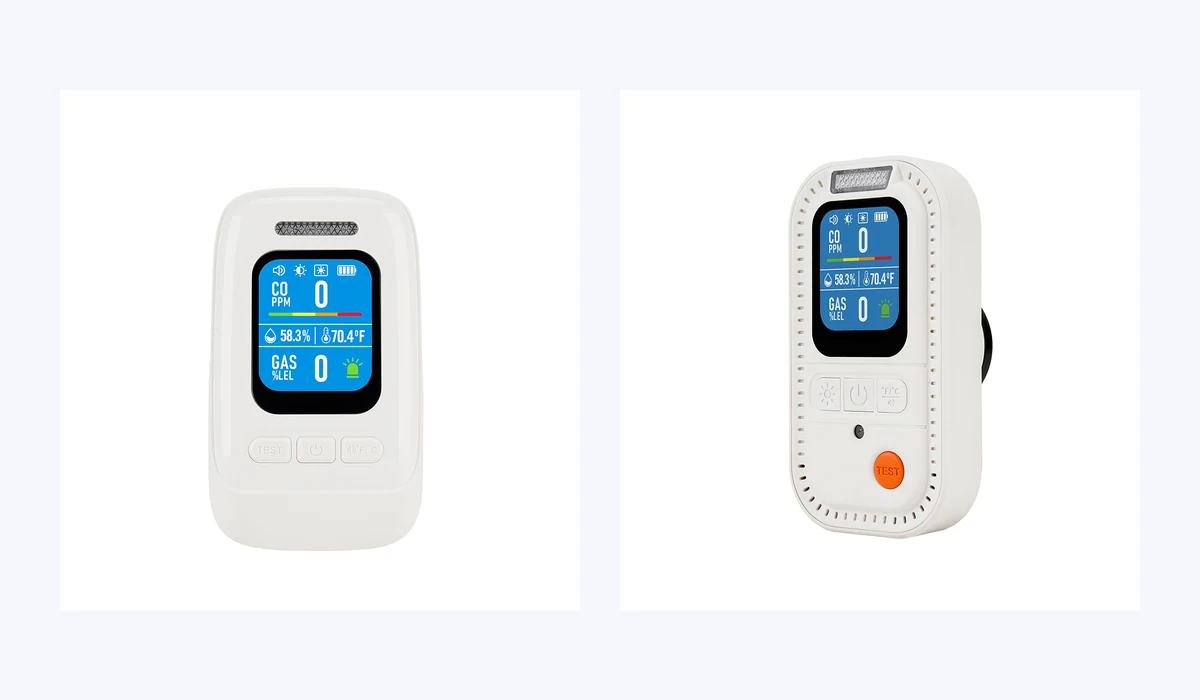
Ask SORBO for sample options across combustible and indoor carbon monoxide detector platforms.
Private Label, Packaging, and Channel Reality
Most first orders succeed when branding stays on proven hardware: logo printing or labels, housing color, retail box, user manual languages, and barcode/retail inserts. Firmware changes (thresholds, voice prompts, display UI) need extra validation time—budget that separately. Retail buyers also care about how you explain natural gas vs CO on-pack so customers do not buy the wrong device. Keep claims conservative and aligned with the sensor set on the PCB.
Channel mix matters. Hardware retailers may prefer plug-in kitchen units. Online and outdoor/RV channels may pull rechargeable multi-gas SKUs. A single China OEM that can cover both reduces SKU chaos for your warehouse.
Practical Assortment Blueprint with Current SORBO Platforms
Catalog reality for many importers is not a sealed methane-only wall plate alone. A workable B2B shelf often looks like:
- Hero combustible + CO plug-in for kitchens and indoor fixed use.
- Rechargeable combustible + CO for portable/secondary channels.
- CO-focused portable or indoor SKUs to complete safety messaging.
That blueprint keeps the OEM natural gas detector conversation honest: you are sourcing combustible leak protection, then attaching adjacent CO products customers already search for. Start from the category page, then pull SKUs into one RFQ rather than three disconnected factory chats.
FAQ: OEM Natural Gas Detector Sourcing
1. What should be in an OEM natural gas detector RFQ?
Markets and plugs, gas type (methane/LPG/dual), power architecture, branding pack, compliance documents needed, MOQ, sample timing, and whether CO detection is required on the same device.
2. Is a natural gas detector the same as a CO alarm?
No. Natural gas/LPG detectors target combustible leaks. CO alarms target toxic carbon monoxide. Many OEM catalogs offer both, including combined combustible + CO models.
3. What MOQ should B2B buyers expect from China?
It varies by customization depth. Logo and packaging programs can start lower than full ODM tooling. Ask for sample MOQ and production MOQ separately, and confirm color/plug variants do not silently raise either number.
4. Which sensor type should I specify?
Residential combustible programs often use semiconductor sensors; other designs use catalytic combustion. Specify the application and ask the factory which sensor is on the quoted PCB, then verify on samples.
5. Can one OEM cover plug-in and portable gas detectors?
Yes—if the factory already runs both platforms. That is usually better than splitting branding across two unrelated suppliers for the same season.
6. What certifications should I request?
Request evidence that matches your destination markets and the exact model family. Management-system certificates help, but product-level reports and labeling rules for your countries matter more for customs and retail onboarding.
7. How long does private-label sampling usually take?
Simple logo/packaging samples can move in weeks; firmware, new molds, or multi-language UI take longer. Put the critical path (sensor confirmation → functional sample → packaging proof → pilot run) in writing.
Conclusion
Sourcing an OEM natural gas detector from China works when you treat it as a specified safety program—not a random Alibaba cart item. Lock markets, gas scope, power, branding, and compliance evidence before you compare FOB prices. Use one factory conversation to cover combustible leak alarms and adjacent CO SKUs so your assortment stays coherent. If you need a manufacturer that already runs plug-in and rechargeable combustible/CO platforms under OEM/ODM, start with SORBO’s gas detector category and send a scored RFQ to the team for platform matching and sample planning.
Ready to source with SORBO?
Review the catalog, then tell us your markets and branding scope for an OEM natural gas detector shortlist.
