
Introduction
Mounting a gas detector in the wrong place can trigger customer returns. It can also cause catastrophic safety liabilities. Proper natural gas detector placement depends entirely on the physical density of the target gas. Here is how to position alarms correctly for methane versus propane, keeping your clients safe and compliant.
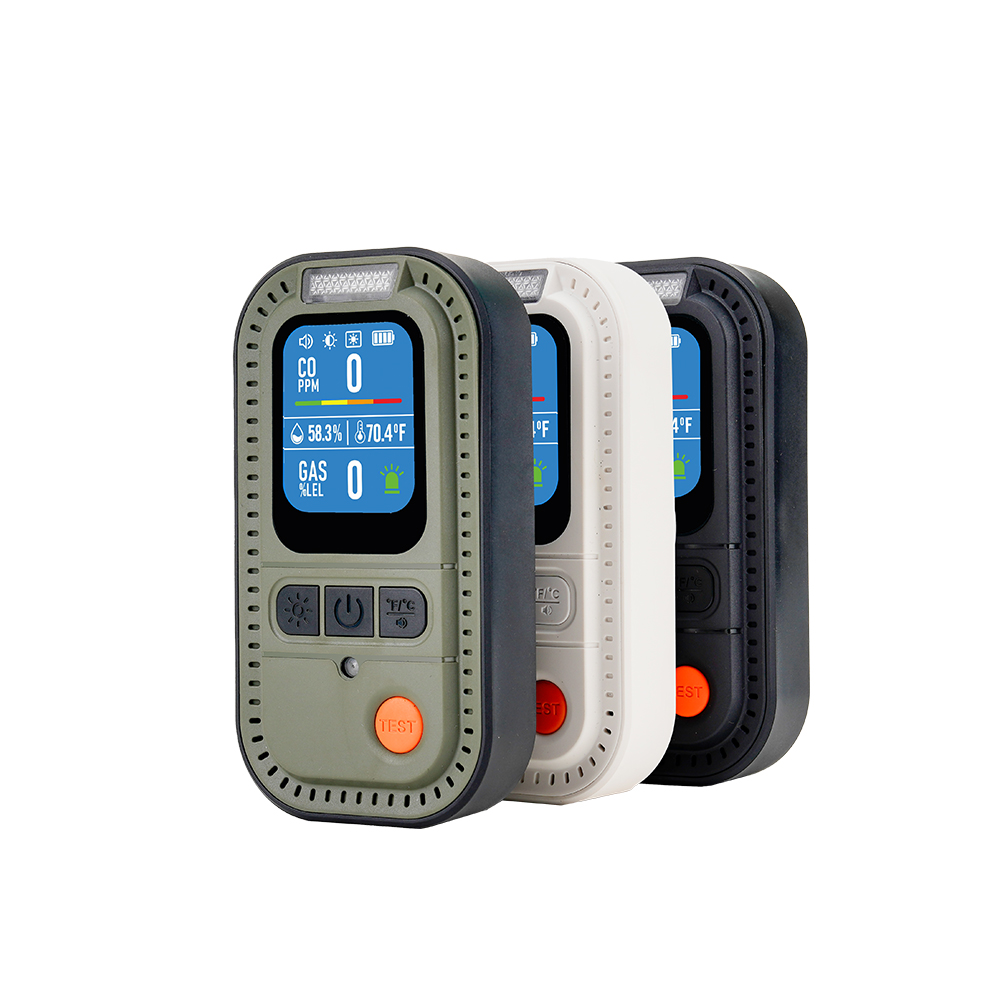
Natural Gas (Methane) vs. LPG (Propane/Butane): The Density Physics
Combustible gases do not behave identically when a pipe leaks. Their movement is governed by their specific gravity relative to ambient air.
Ambient air has a relative density defined as 1.0.
If a leaked gas is lighter than air, it floats toward the ceiling. If it is heavier than air, it sinks down to the floor.
The Physics of Natural Gas (Methane)
Natural gas consists primarily of methane (CH4).
Methane has a specific gravity of approximately 0.55.
Because it is nearly half the weight of air, leaked methane rises rapidly. It gathers in high pockets near the ceiling.
Therefore, ceiling-level airflow dictates how fast your alarm detects natural gas.
The Physics of Liquefied Petroleum Gas (LPG)
LPG is composed of propane (C3H8) or butane (C4H10).
Propane has a specific gravity of roughly 1.52. Butane is even heavier at 2.0.
Both gases are significantly heavier than air.
When a leak occurs, LPG does not rise. Instead, it sinks toward the floor.
It flows like an invisible liquid, filling low crevices, floor drains, and basements.
Gas Physical Characteristics Comparison
| Parameter | Natural Gas (Piped Methane) | Liquefied Petroleum Gas (Propane / LPG) |
| Main Chemical Formula | CH4 | C3H8 and C4H10 |
| Specific Gravity (Air = 1.0) | Roughly 0.55 (Lighter than air) | Roughly 1.52 to 2.0 (Heavier than air) |
| Dispersion Behavior | Rises straight toward the ceiling | Sinks and pools across the floor |
| Lower Explosive Limit (LEL) | Approximately 5.0% volume | Approximately 2.1% volume |
| Required Alarm Height | Within 30 cm below the ceiling | Within 30 cm above the floor |
| Typical Household Source | Municipal utility pipelines, furnaces | Bulk storage tanks, gas cylinders, RV systems |
Exact Natural Gas Detector Placement Guide
When you supply detectors for piped utility gas, precise mounting instructions protect your business reputation.
A high-quality sensor fails if installed at the wrong height.
Vertical Mounting Height for Methane
Natural gas alarms must always be installed high on the wall:
-
Mount the detector within 30 cm (12 inches) below the ceiling.
-
Never install the detector directly on the ceiling unless specified by the manufacturer.
-
Maintain at least 10 cm of clearance from the ceiling-wall corner to avoid stagnant air.
Horizontal Distance from Appliances
Distance from the potential leak source is equally crucial:
-
Install the alarm between 1.5 meters and 4 meters (5 to 13 feet) away from the appliance.
-
Placing it closer than 1.5 meters exposes the sensor to burner ignition bursts.
-
Placing it further than 4 meters creates dangerous detection delays during slow leaks.
Exact LPG / Propane Detector Placement Guide
Installing a propane detector near the ceiling is a critical safety failure. The room could reach explosive limits before high alarms trigger.
Vertical Mounting Height for LPG
Propane alarms must monitor the lower breathing zone:
-
Mount the unit within 30 cm (12 inches) above the floor level.
-
Position the detector on a vertical wall surface rather than laying it flat.
-
Ensure furniture or baseboard heaters do not obstruct natural gas diffusion.
Why You Must Never Mount Propane Detectors Directly on the Floor
Some installers make the mistake of placing units directly on the floor:
-
Floor surfaces accumulate heavy dust, pet hair, and lint that clog sensor vents.
-
Wet mopping and floor cleaning detergents can chemically poison the sensing element.
-
Air right against the floor surface can remain stagnant, delaying gas entry into the chamber.
Locations to Strictly Avoid (Dead Zones & Interference)
Even with the correct height, environmental micro-climates can ruin sensor performance.
You must instruct trade installers to avoid specific installation dead zones.
Direct Drafts and Ventilation Airflow
Never mount a detector directly next to windows, exterior doors, or HVAC vents.
Strong drafts dilute leaked gas before it reaches the sensor.
Likewise, keep alarms away from kitchen exhaust hoods. Exhaust fans suck gas away, hiding real leaks.
High Moisture and Grease Zones
Kitchen sinks, dishwashers, and cooking pans create dense steam and oil droplets.
Oil aerosols stick to the internal sensor substrate, permanently degrading sensitivity.
Keeping alarms at least 1.5 meters away from cooking burners helps prevent false alarms caused by harmless culinary vapors.
Dead Air Pockets
Corners where walls meet ceilings or floors create stagnant air cushions.
Thermal boundaries prevent circulating room air from entering these crevices.
Always keep alarms at least 15 cm away from room corners.
Commercial & Residential Case Studies for Installers and B2B Wholesalers
How do these rules apply to real-world commercial tenders and residential projects?
Review these two practical installation scenarios.
Case 1: High-Density Residential Apartments (Piped Natural Gas)
In multi-family residential towers, developers install individual alarms in every kitchen.
-
Target Fuel: Municipal utility natural gas.
-
Standard Power Setup: AC 110V or 230V plug-in with 9V battery backup.
-
Mounting Choice: Upper wall mount, 25 cm below the ceiling, 2 meters from the stove.
-
Key Benefit: Fast detection of riser pipe cracks while ignoring minor boiling steam.
Case 2: Restaurant Kitchens with Bulk LPG Tanks
Commercial restaurant facilities face harsh cooking environments and strict fire marshal audits.
-
Target Fuel: Propane gas piped from outdoor storage cylinders.
-
Standard Power Setup: Hardwired AC supply with auxiliary relay outputs for automatic shutoff valves.
-
Mounting Choice: Lower wall mount, 20 cm above the floor, away from dishwashing splash zones.
-
Key Benefit: Immediate shutoff of external solenoid valves the moment propane accumulates at floor level.
Frequently Asked Questions (FAQ)
Q1: Can I use the same detector in the same spot for both natural gas and LPG?
-
Quick Answer: No. Natural gas rises to the ceiling, while LPG sinks to the floor. Placing one detector in the middle of a wall leaves both gases undetected until dangerous concentrations accumulate throughout the room.
Q2: How far away from the stove or boiler should a natural gas detector be mounted?
-
Quick Answer: Mount the detector between 1.5 meters and 4 meters horizontally from the appliance. Mounting closer causes false alarms from cooking, while mounting further away delays detection during an actual leak.
Q3: Why should propane detectors not be installed directly on the floor?
-
Quick Answer: Floor surfaces create stagnant air pockets and expose sensors to dust, pet fur, and mop water. Installing the unit 30 cm above the floor ensures active air circulation and protects delicate electronic components.
Q4: Can draft from windows or air conditioning affect detector placement?
-
Quick Answer: Yes. Direct airflow from windows, air conditioners, or exhaust fans blows leaked gas away from the sensor. Always mount alarms where natural room air circulates freely without intense mechanical drafts.
Sourcing Wall-Mount & Plug-In Gas Detectors from Sorbo
Proper placement guarantees that quality gas hardware performs when emergencies happen. At Zhejiang Sorbo Technology Co., Ltd., we manufacture certified wall-mount and plug-in gas detectors tailored for your distribution market. Contact our engineering team today to review our technical specifications and request product samples.
