
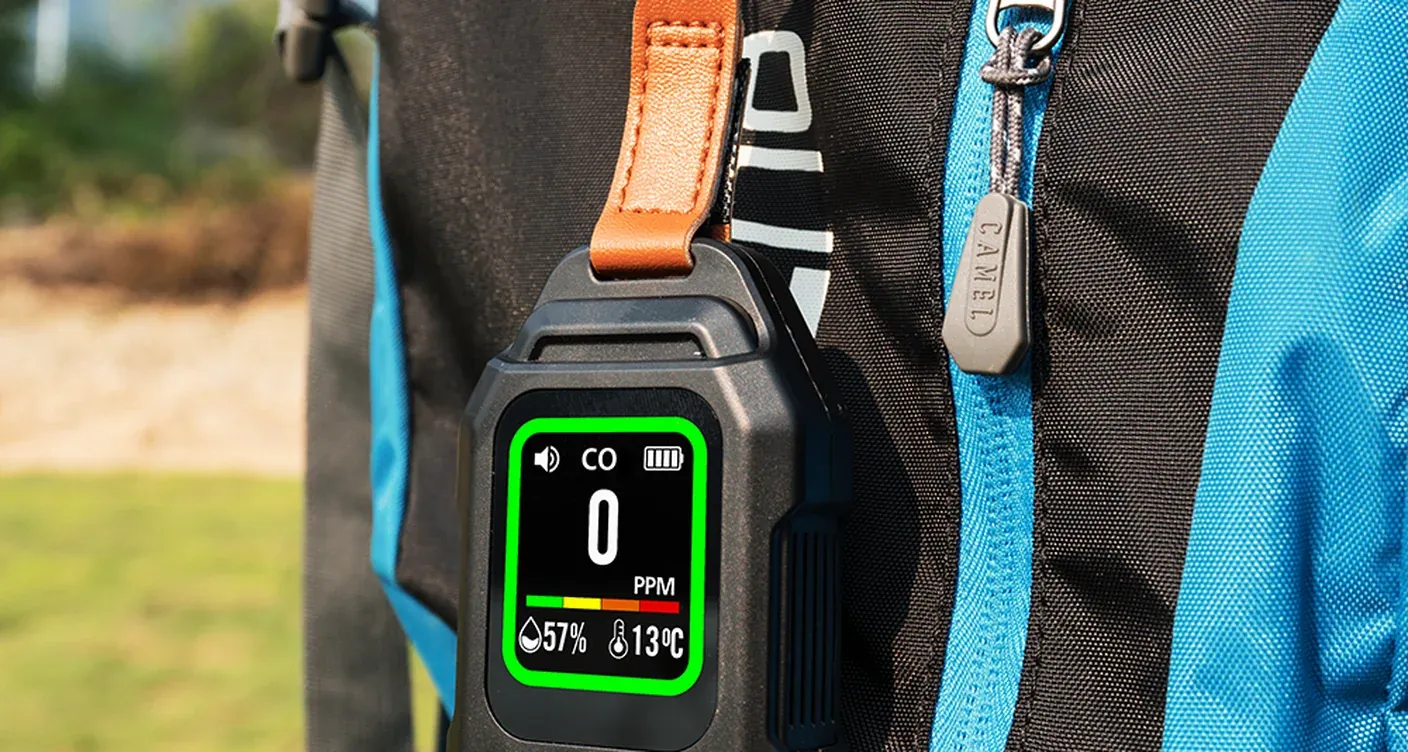
Retail buyers once treated carbon monoxide alarms as a cheap disposable SKU. That model is fading. Across US state rules and EU retail specs, the 10 year battery CO alarm with a sealed lithium cell is becoming the default residential format. For distributors and brand owners, the shift means fewer service calls, cleaner packaging claims, and lower lifetime cost. This guide explains why sealed lithium designs are replacing traditional models, how to compare decade-long TCO, and what OEM partners should prove before you place a program order.
What a 10 Year Battery CO Alarm Actually Is
A 10 year battery CO alarm combines a long-life electrochemical carbon monoxide sensor with a sealed lithium power pack that is not meant for consumer replacement. After activation, the unit is designed to monitor and alarm for about a decade, then signal end of life so the whole device is replaced. That architecture matches how modern CO cells age: when the sensor approaches the end of its useful life, swapping only the battery does not restore accurate detection.
Traditional models usually rely on replaceable AA, AAA, or 9V cells. Those designs look cheaper on a purchase order, but they create a second product lifecycle—battery maintenance—that retailers, property managers, and brand owners eventually pay for through returns, reviews, and support tickets. If you are building or sourcing a fixed residential CO line, start with the sealed format first, then decide whether your assortment also needs portable or multi-gas SKUs from a broader gas detector catalog.
Why Traditional Replaceable-Battery Models Are Losing Ground
Replaceable-battery CO alarms fail commercially for predictable reasons:
- Low-battery chirps drive returns. Night-time chirping is one of the most common complaint themes in consumer reviews, even when the sensor is working.
- Maintenance compliance is weak. Households delay battery changes. Vacant rentals and seasonal properties are worse.
- Sensor life and battery life are misaligned. A fresh battery in a drifting CO cell creates a false sense of safety.
- Retail and code pressure. Multiple US states and EU retail channels prefer or require sealed 10-year power for residential smoke/CO categories, pushing buyers toward sealed lithium CO SKUs.
The photo below shows a classic replaceable-battery layout (AAA backup on a plug-in style housing). It is useful engineering for some plug-in multi-gas devices, but it is exactly the maintenance model sealed 10 year battery CO alarms are designed to remove from the residential CO shelf.
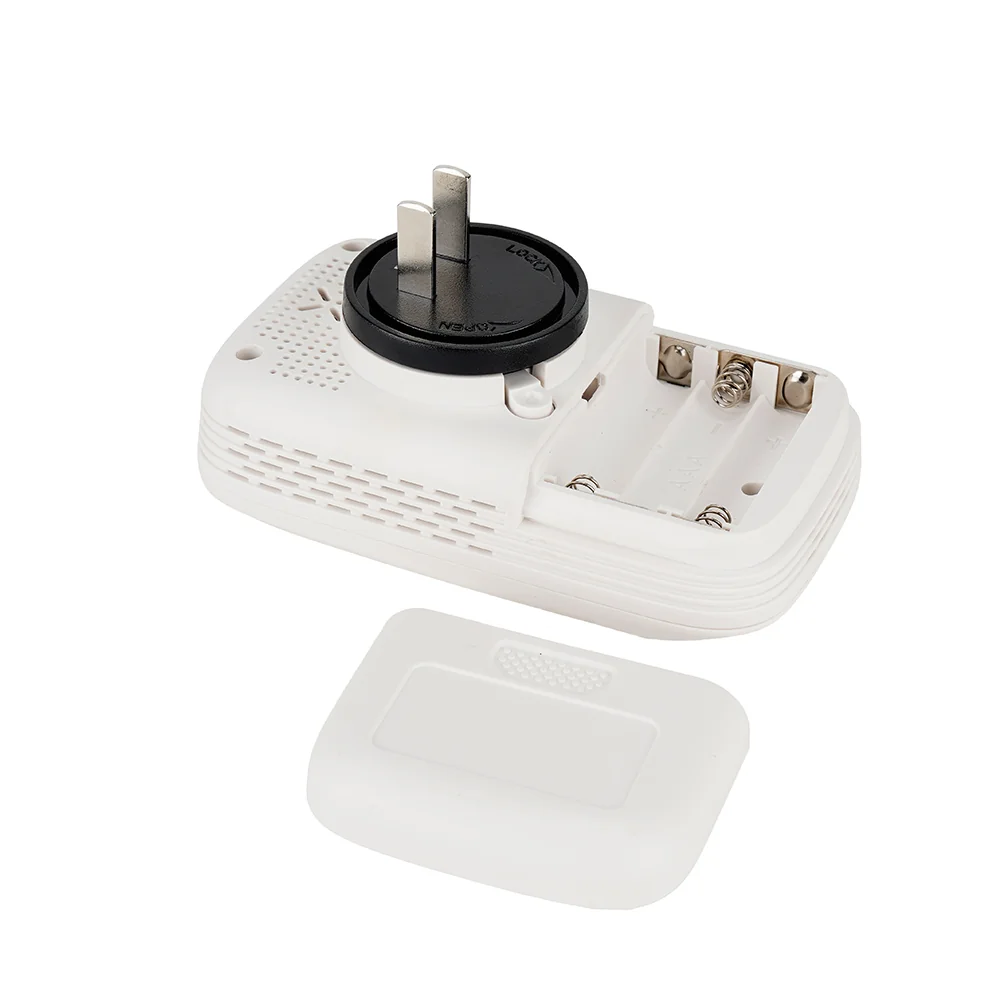
Traditional replaceable-battery architecture: useful for some plug-in multi-gas designs, but a liability for residential CO programs that need a true 10 year battery CO alarm story.
Sourcing sealed lithium CO programs?
SORBO supports OEM/ODM gas safety devices for distributors and brand owners—share your target market and certification list to get a production-ready proposal.
The B2B Case: Lower Lifetime Cost, Cleaner Retail Story
For distributors and private-label brands, the sealed 10 year battery CO alarm wins on operating economics even when the factory price is higher:
- Fewer SKU support events — no annual battery-replacement education in manuals and packaging.
- Fewer warehouse liabilities — less risk of shipping units with depleted demo batteries if the design includes a proper shipping deactivate pin.
- Stronger shelf claim — “sealed 10-year lithium battery” is easy to communicate on blister cards and Amazon A+ content.
- Aligned replacement cycle — unit replacement at end of life matches gas detector sensor lifespan, which is easier to explain to property managers and retailers.
Power architecture still has to match the sensor. Pure CO electrochemical cells draw micro-amps and suit sealed lithium. Combustible-gas sensing with heated elements usually needs AC power. That is why assortment planning often pairs a sealed CO wall alarm with separate plug-in or rechargeable multi-gas devices, such as an indoor combustible gas and CO detector, instead of forcing every function into one battery chemistry.
Interactive Tool: 10-Year CO Alarm TCO & Replacement Planner
Use this planner to compare a replaceable-battery CO fleet with a sealed 10 year battery CO alarm fleet. Enter unit counts, swap assumptions, and rough service costs. Results are directional for purchasing discussions—not a formal financial audit.
Enter values and click Calculate to compare sealed vs replaceable-battery CO programs.
| Battery swaps over horizon | — |
| Low-battery service events | — |
| Traditional program TCO | — |
| Sealed 10-year program TCO | — |
| Estimated savings with sealed | — |
| Units to replace at EOL | — |
Disclaimer: Approximate planning model only. Labor rates, warranty terms, and certification costs vary by market. SORBO is not liable for purchasing decisions based solely on this calculator.
Why Sealed Lithium Works So Well with CO Sensors
Electrochemical CO sensors generate a tiny current when carbon monoxide reacts at the sensing electrode. Standby draw is extremely low, which is why a properly engineered sealed lithium pack can support a decade of monitoring, self-test chirps, and alarm events. That pairing is the technical foundation of every credible 10 year battery CO alarm.
Buyers evaluating factories should ask for more than a battery datasheet. Confirm cell chemistry (often Li-MnO2 for long standby life), soldering or welded interconnect quality, shipping deactivate design, and firmware that announces end of life when the decade is up. SORBO’s engineering content on how electrochemical CO sensors work is a practical checklist for those conversations.
If your roadmap also includes travel, RV, or job-site monitoring, keep sealed wall alarms and portable detectors as separate lines. Portable products—like a rechargeable CO detector with light—solve mobile use cases that a fixed sealed alarm is not meant to cover.
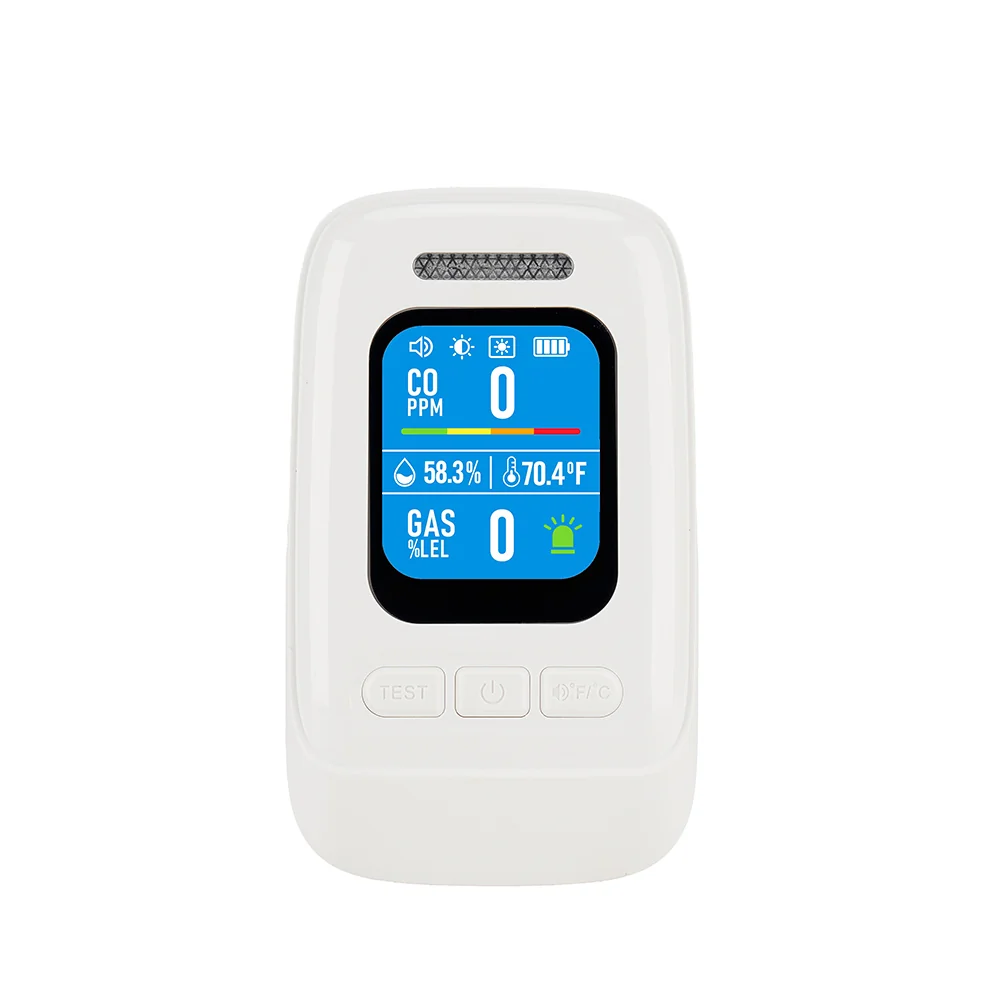
Complementary assortment example: multi-gas display detectors support kitchens and utility rooms, while sealed 10 year battery CO alarms cover long-life residential wall programs.
Need OEM samples for your next CO launch?
Tell us your target retail channel, plug standard, and private-label packaging needs. We manufacture in Wenzhou with full OEM/ODM support.
What Distributors and Retail Buyers Should Change Now
Assortment strategy is shifting from “cheapest CO alarm” to “lowest complaint CO alarm.” Practical moves for B2B teams:
- Lead with sealed lithium CO for residential wall programs. Keep replaceable-battery CO only where a channel still demands it.
- Separate combustible-gas SKUs. Heated gas sensors usually need plug-in or hardwired power; do not promise a universal 10-year battery story for continuous catalytic or MOS gas sensing.
- Update packaging claims carefully. “10 year battery” must match real cell capacity, sensor life, and end-of-life firmware—not just a marketing line.
- Plan the decade refresh. Property portfolios should budget unit replacement near year 10, not endless battery visits.
- Use portable CO as an add-on category. Outdoor and travel demand is rising; see SORBO’s outdoor carbon monoxide detector range for mobile SKUs.
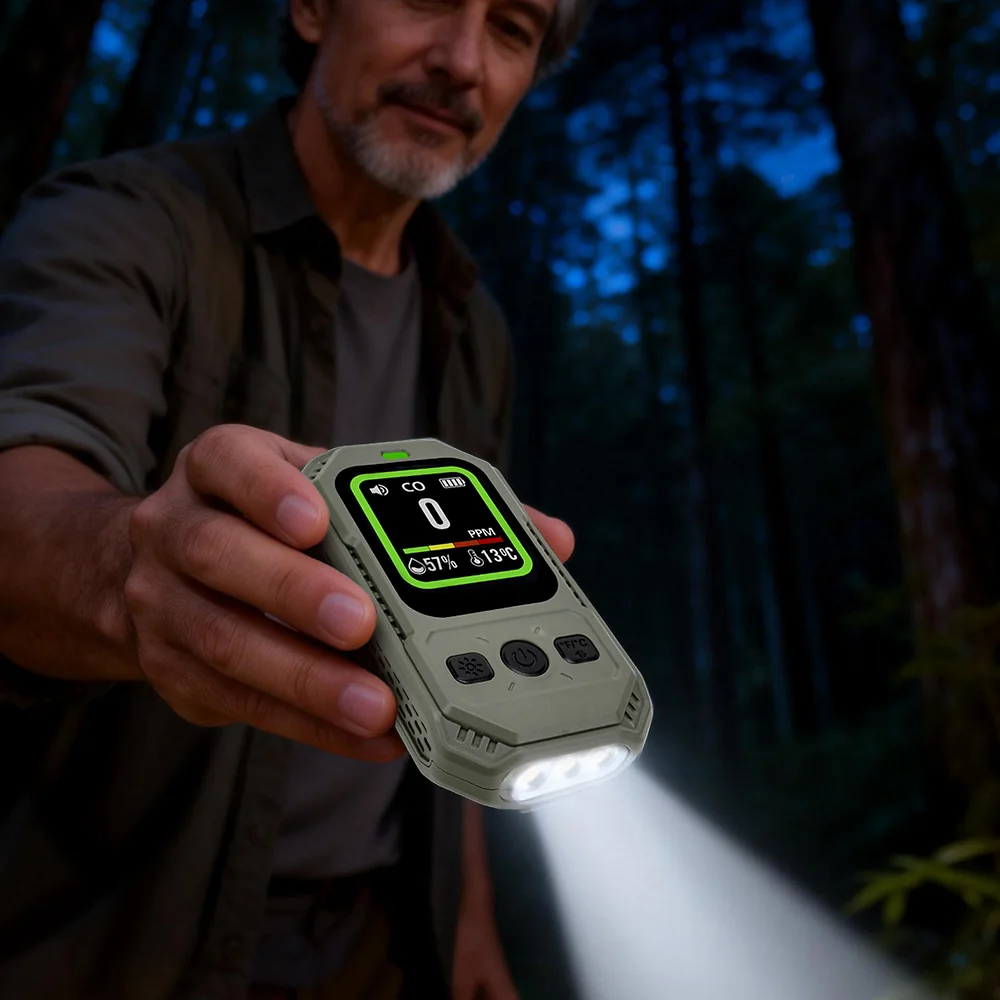
Lifestyle demand still matters: portable CO detectors serve travel and outdoor scenarios that sealed wall alarms do not replace.
How to Audit an OEM for 10 Year Battery CO Alarm Programs
SORBO (Zhejiang SORBO Technology Co., Ltd.) manufactures smart home and outdoor safety devices with OEM/ODM capacity for global brands. When you audit any factory—including us—for a sealed lithium CO program, bring a commercial checklist rather than a lab thesis:
- Documented CO sensor supplier and rated service life aligned to 10 years
- Sealed lithium cell specification and storage/shipping deactivate method
- Alarm pattern and end-of-life indication behavior
- Target certifications for your market (for example UL 2034 / EN 50291 pathways—confirm per SKU)
- Private-label packaging, multilingual manuals, and barcode/inner carton options
- Stable monthly capacity and sample lead time for retailer onboarding
For power-architecture trade-offs beyond sealed lithium, compare notes with our B2B guide on battery vs hardwired gas alarms. For standards framing useful to importers, see UL 2034 vs EN 50291.
Frequently Asked Questions
1. What is a 10 year battery CO alarm?
A 10 year battery CO alarm is a carbon monoxide detector powered by a sealed lithium battery designed to last about ten years without consumer battery replacement. The unit is typically replaced as a whole when the battery or sensor reaches end of life.
2. Why are sealed lithium CO alarms replacing traditional models?
They reduce low-battery chirp complaints, remove annual battery maintenance, align power life with sensor life, and match retail and regional preferences for sealed residential safety devices.
3. Are 10 year battery CO alarms more expensive for distributors?
Factory unit cost is often higher, but total cost of ownership is frequently lower once you count battery swaps, service calls, returns, and negative reviews. Use the TCO planner above with your own labor rates.
4. Can one sealed battery product also detect natural gas continuously?
Usually not with the same power architecture. Continuous combustible-gas sensing typically needs heated sensors and AC power. Many brands therefore sell a sealed CO alarm plus a separate plug-in gas detector.
5. What should OEM buyers verify before approving a sealed CO design?
Verify sensor life rating, lithium cell specification, shipping deactivate design, end-of-life alarm behavior, target certifications, and packaging claims so “10 year” is technically true for your market.
6. Do portable CO detectors replace wall-mounted 10 year battery CO alarms?
No. Portable units are for travel, RVs, camping, and spot checks. Residential code-driven protection still centers on properly placed fixed alarms. Offer both categories if your channel serves home and outdoor customers.
7. How should property managers plan replacements?
Track installation or activation dates, test devices regularly per local guidance, and budget full unit replacement near the rated end of life instead of relying on battery changes to extend an aging sensor.
Conclusion
The market is moving for a practical reason: a sealed 10 year battery CO alarm removes the weakest link in traditional residential CO programs—repeat battery maintenance that does not fix an aging sensor. For B2B buyers, that means cleaner packaging claims, fewer support events, and a replacement cycle you can plan. Pair sealed CO wall programs with the right plug-in or portable gas SKUs, audit OEM partners on cell and sensor evidence, and price the decade—not only the carton. SORBO can help distributors and brand owners build that assortment with OEM/ODM manufacturing support from China to global retail channels.
Ready to quote your next CO / gas detector program?
Share annual volume, target certifications, and branding requirements. Our team will recommend sealed CO and complementary multi-gas options.
