
Introduction: Retail Trends vs. Contractor Demands in Gas Detection
Choosing between a battery vs hardwired gas alarm directly impacts your inventory turnover and return rates. Retail consumers demand quick DIY setup, while building contractors need hardwired reliability. Both power formats serve distinct market channels with specific power trade-offs. Here is how to select the right product line for your distribution business.
Battery-Operated Gas Alarms: Pros, Cons, and Technical Limits
Battery-powered safety devices dominate retail store shelves. However, engineering a battery-operated combustible gas alarm presents significant physical challenges.
The Retail Appeal of Battery Power
Consumers love cord-free electronics:
-
Zero Installation Barrier: Buyers mount the unit with two screws without hiring an electrician.
-
Portable Flexibility: Users easily move units between rental homes, campers, or temporary living quarters.
-
Blackout Resilience: The unit keeps monitoring during electrical storms and municipal utility blackouts.
The Physics Problem: Heating Coils vs. Battery Chemistry
You must understand sensor power consumption before selecting inventory.
Electrochemical carbon monoxide cells draw sub-micro-amp currents. They easily run for 10 years on a single lithium battery.
However, combustible gas sensors (methane and propane) rely on heated metal oxide or catalytic beads.
These internal heating coils consume 50 to 150 milliamperes of continuous current.
A standard 9V alkaline battery would drain completely within several days.
This is why pure battery operation is common for smoke and CO units, but rare for standalone combustible gas units unless combined with multi-sensor smoke and gas alarms using intermittent pulse sampling.
Hardwired & AC Plug-In Gas Detectors: Stability and Interconnection
To supply continuous power to heated sensors, commercial markets rely on AC mains voltage.
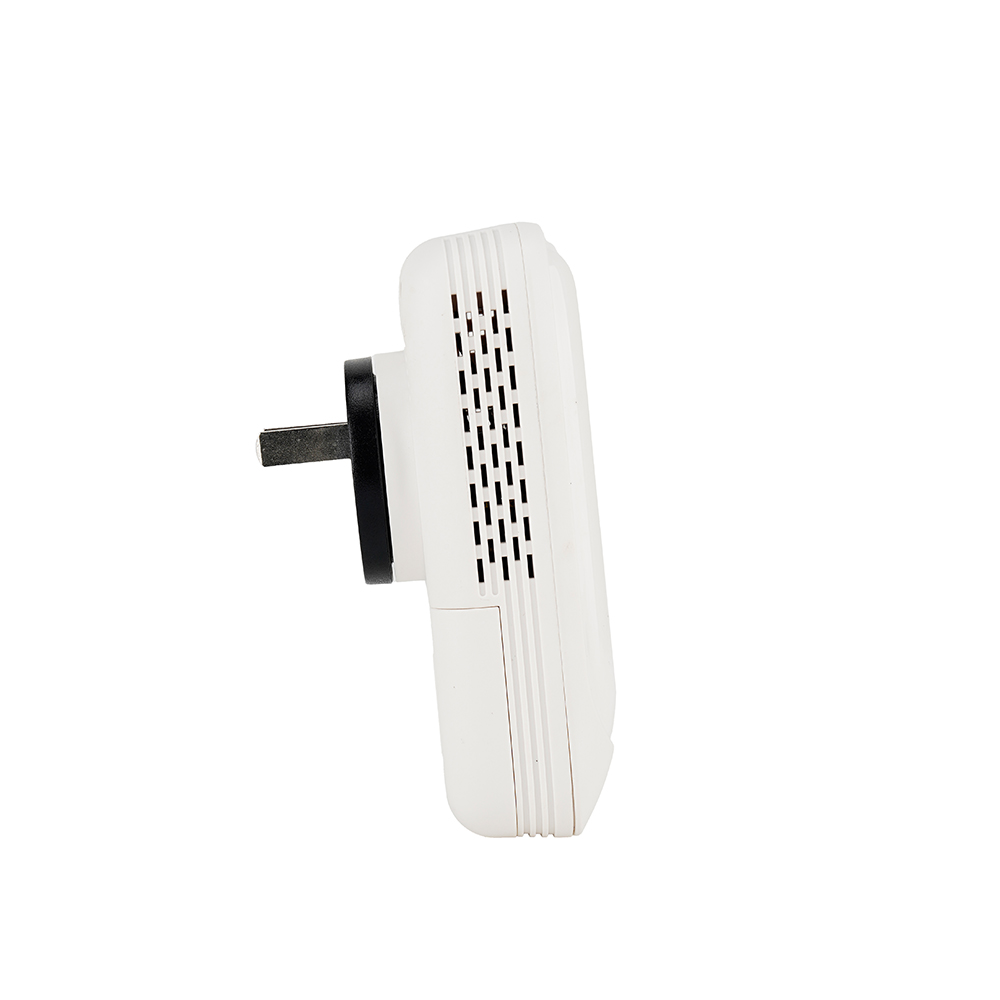
AC Plug-In Detectors with Battery Backup
For residential kitchens, AC plug-in alarms represent the most practical compromise:
-
The unit plugs directly into standard wall outlets (110V or 230V).
-
The mains line continuously powers the heated sensor coil.
-
An internal 9V or rechargeable NiMH battery handles short-term power outages.
-
End users install the device in seconds without touching building wiring.
Hardwired Commercial Alarms
Building contractors and electrical trade distributors prefer permanently hardwired detectors:
-
Units connect directly into home electrical junction boxes.
-
Many municipal building codes strictly mandate hardwired safety devices.
-
Hardwired units eliminate the risk of occupants unplugging alarms to free up wall sockets.
Hardwired Interconnection vs. Wireless RF
Hardwired systems allow multi-room interconnection via an auxiliary signal wire.
When a basement detector senses methane, every alarm across the building sounds simultaneously.
Modern smart devices also achieve this wirelessly using 433MHz RF or Zigbee mesh networking.
Head-to-Head Comparison: Cost, Installation, and Channel Suitability
When building your product catalog, you must weigh manufacturing cost against channel sales velocity.
Feature and Commercial Metric Breakdown
| Commercial Parameter | Pure Battery-Operated (CO Focused) | AC Plug-In (Combustible Gas) | Hardwired 110V/230V (Contractor Grade) |
| BOM Production Cost | Low to Moderate | Moderate | Moderate to High |
| Installation Labor | Zero (Consumer DIY) | Zero (Plug into wall outlet) | High (Requires licensed electrician) |
| Retail Shelf Appeal | Very High (E-commerce favorite) | High (Supermarkets, hardware stores) | Low for consumers (High for trade supply) |
| Continuous Power Draw | Micro-amps (Pulse mode) | 2W to 5W constant draw | 2W to 5W constant draw |
| Target Gas Capabilities | Carbon monoxide and smoke | Methane, Propane, and CO | Methane, Propane, and Industrial gases |
| Blackout Operation | 100% operational | 24 to 48 hours with backup battery | 24 to 72 hours with backup battery |
| Average Product Return Rate | Under 1.5% | Under 2.0% | Extremely low (Under 0.8%) |
Which Category Should Brands & Importers Stock?
Your optimal SKU assortment depends entirely on where your products are sold.
For Amazon, E-Commerce, and Retail Supermarkets
Stock AC plug-in units with battery backup for combustible gas, and 10-year sealed battery units for CO.
-
Retail buyers avoid hiring electricians.
-
Plug-in designs deliver high power to heated sensors without complex installation steps.
-
Clear blister packaging showing a standard wall plug drives immediate retail conversion.
For Electrical Wholesalers, Builders, and Government Tenders
Stock hardwired 110V/230V units with relay outputs.
-
Housing developers must comply with local NFPA or EN building codes.
-
Contractors demand hardwired junction box mounting plates.
-
They frequently require auxiliary dry-contact relays to shut off automatic gas solenoid valves.
Frequently Asked Questions (FAQ)
Q1: Why are pure battery-operated combustible gas detectors less common than battery CO alarms?
-
Quick Answer: Combustible gas sensors require internal heating coils operating between 200°C and 400°C. This constant thermal process draws high electrical current that quickly drains standard retail batteries within days.
Q2: Do hardwired gas alarms still work during an electrical power outage?
- Quick Answer: Yes, if they feature integrated battery backup. Quality hardwired and plug-in alarms incorporate 9V alkaline or rechargeable lithium backup batteries that maintain safety monitoring for several days during blackouts.
Q3: Which option offers lower warranty and return rates for retail brands?
-
Quick Answer: Plug-in models with simple operation generate the lowest retail returns. Pure DIY battery models sometimes trigger customer confusion over chirps, while hardwired units cause returns if DIY buyers struggle with wiring.
Q4: Can plug-in gas detectors be interconnected across multiple rooms?
-
Quick Answer: Yes. Modern plug-in gas alarms often include wireless RF modules. When one unit detects fuel gas in the kitchen, it transmits a wireless signal triggering all paired alarms throughout the home.
Customization Capabilities: How Sorbo Delivers Flexible Power Configurations
Balancing power architecture with target buyer demands is critical for high inventory turnover. At Zhejiang Sorbo Technology Co., Ltd., we engineer certified OEM and ODM gas alarm solutions with flexible power configurations. Contact our technical team today to discuss tooling, samples, and volume pricing.
